


Inside the Mind of a Music Curator
The music curators of Atonal and Unsound festivals have to strike the balance of engaging a broad audience, yet challenging them with new sounds. Ahead of their collaborative event The Infinite Now, they share their process.
Words by Whitney Wei
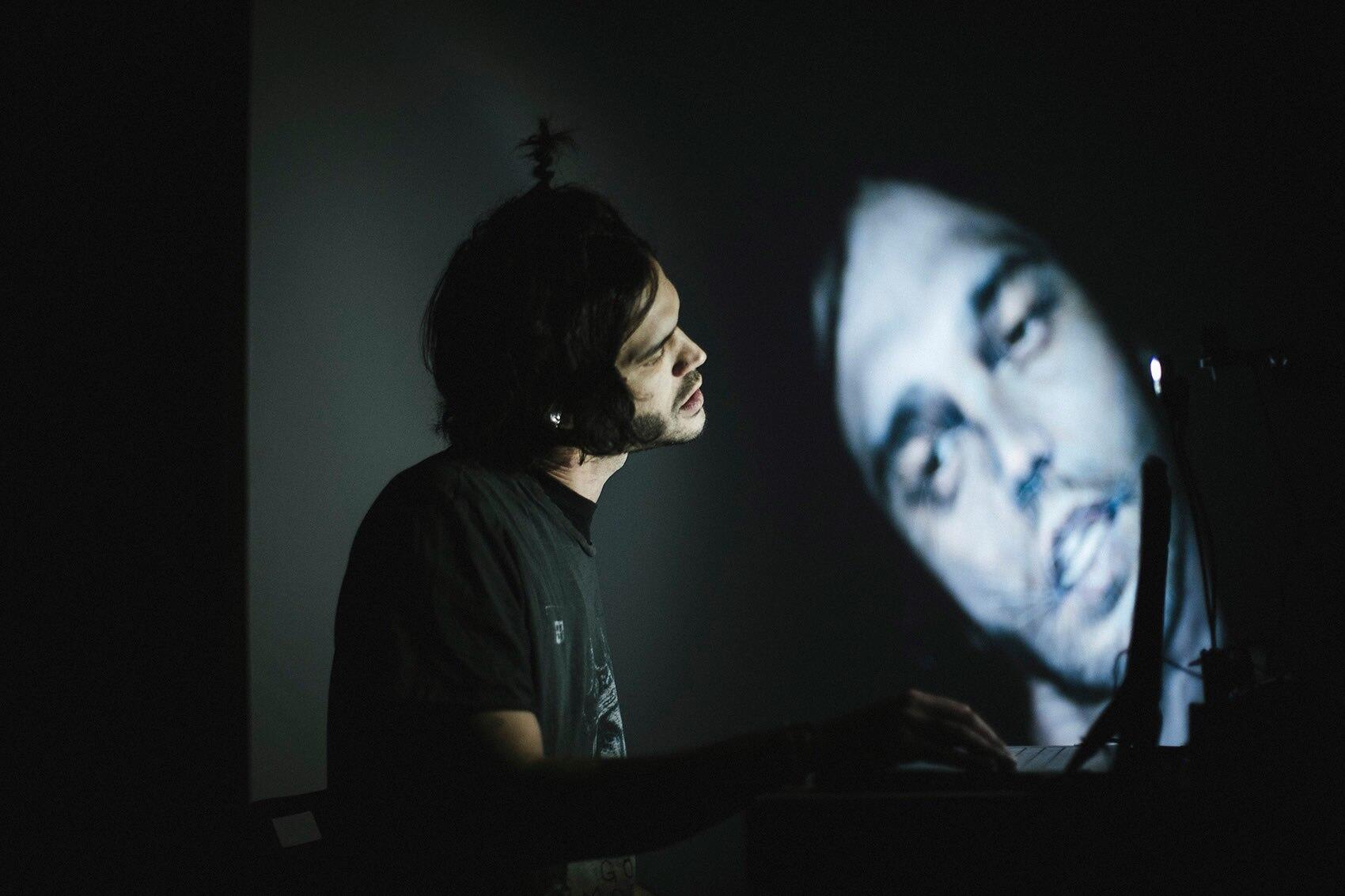
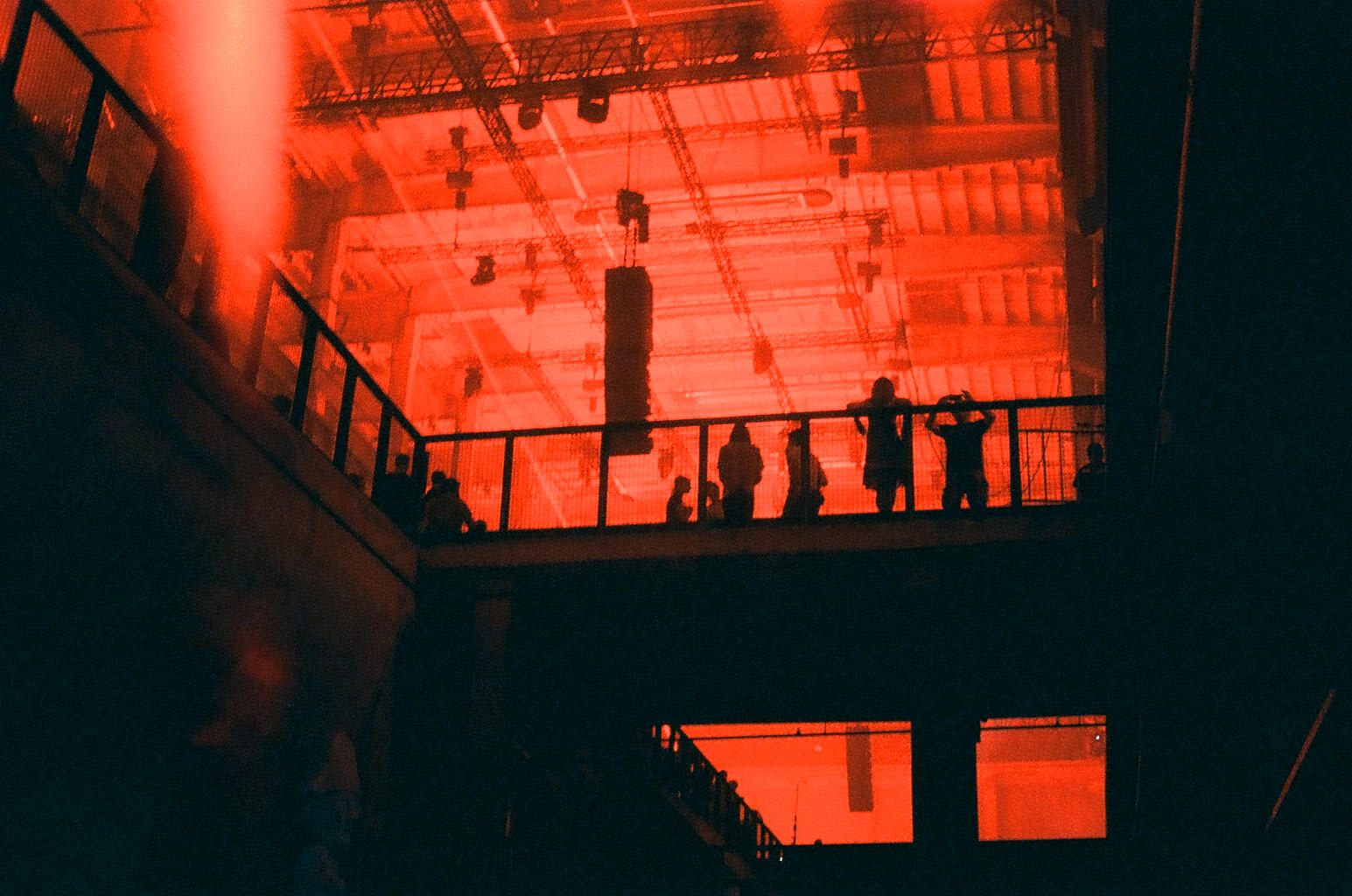
Daniel Lopatin aka Oneohtrix Point Never was the very first of the three prelude concerts leading up to The Infinite Now, a collaborative event by Berlin Atonal and Unsound. On an early May Sunday at the Kreuzberg venue Kraftwerk, Lopatin manipulated oceanic textured sounds, shrouded in darkness against a luminescent LED screen depicting wavering skeletons, M.C. Escher-like geometric rooms, and pixellated, multi-colored abstracts behind him. Within a week, the environs over which Lopatin presided would soon be surrounded with beds and hammocks where audiences would be invited to sleep, relax, and inhabit a 30-hour durational event. It was hard to imagine Kraftwerk's imposing, angular interior housing more domestic comforts, but perhaps this very peculiarity was the first of the many questions The Infinite Now's curators chose to interrogate.

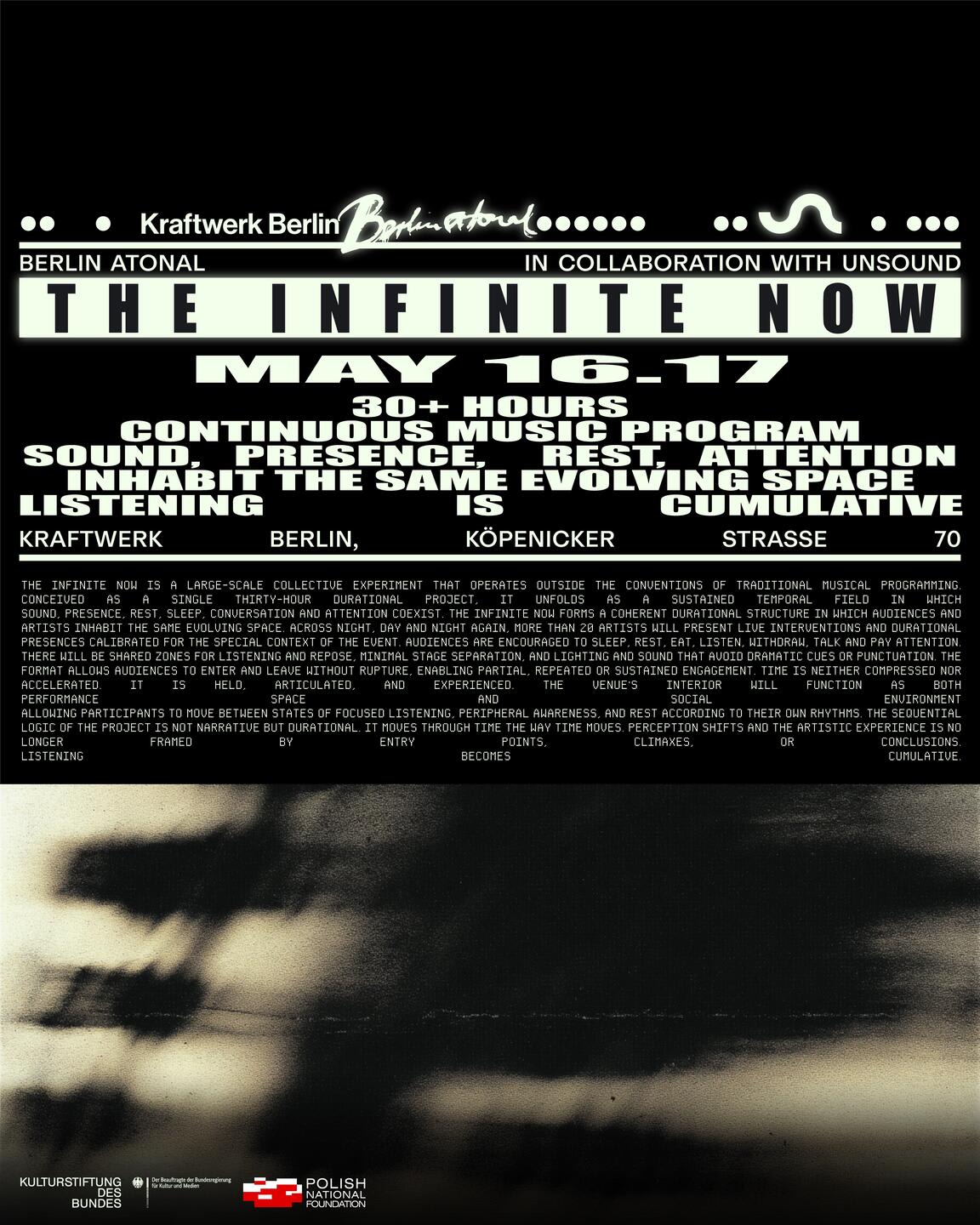
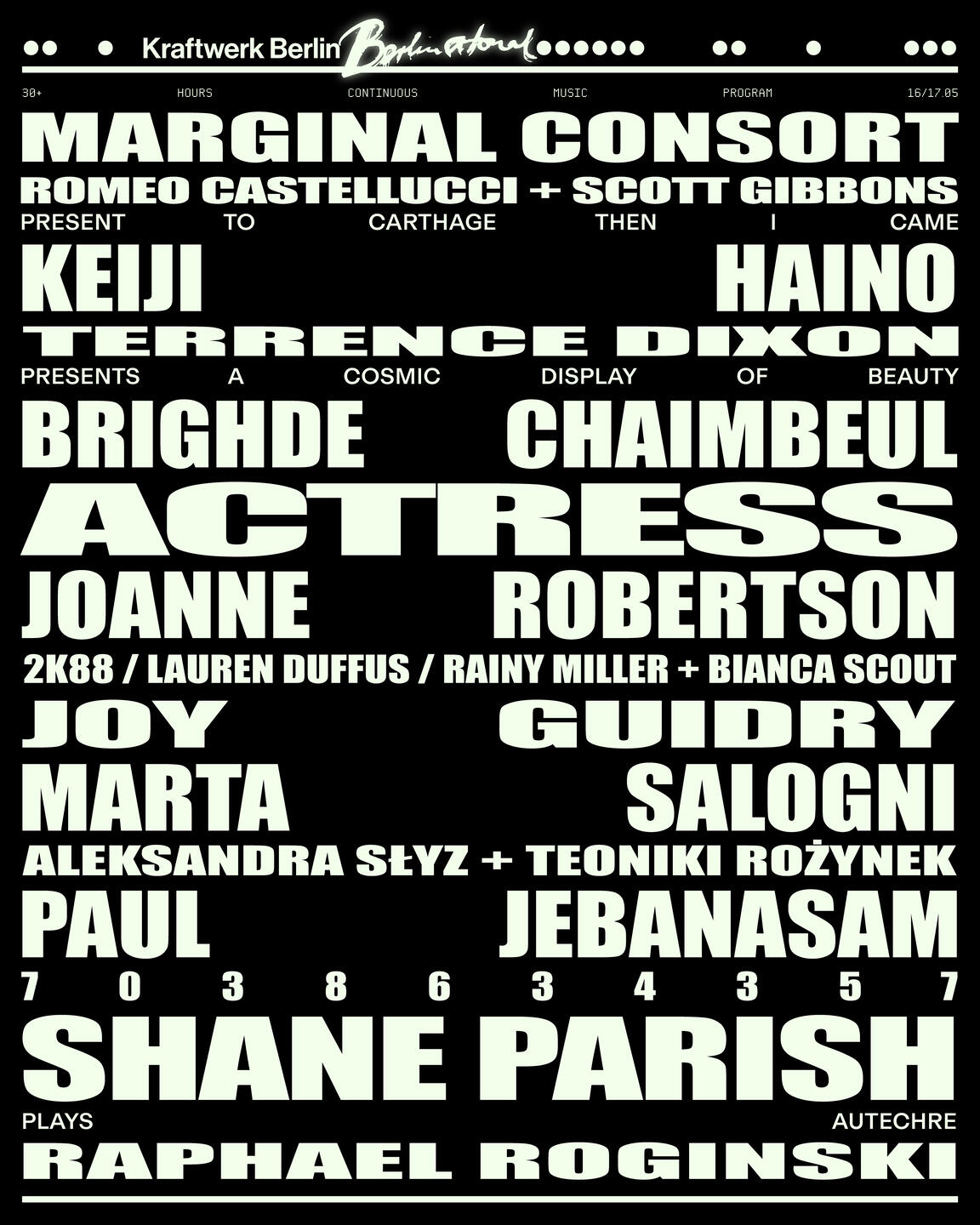
Another question Laurens von Oswald and Harry Glass, the co-founders of Atonal, posed to their wider curatorial team, consisting of Unsound's artistic director Mat Schulz and co-director Gosia Płysa, was, "What is it, actually, asking someone to sleep somewhere so they can enjoy music?" And, when audiences wake up in the middle of the night and catch a fragment of the music being performed, "How do you affect those very human things that happen?" Attempting to answer these inquiries led to the many decisions that became The Infinite Now, which involves many newly commissioned works by artists Actress, Romeo Castellucci, and Terrence Dixon, among others.
It is this open-ended curiosity and daring that dictates the curatorial framework shared by Atonal and Unsound, both known for their respectively unusual and intellectually ambitious translations of the typical festival format. "We are both interested in architecture and the way it interacts with performance. We're both also pioneers in utilizing festivals to commission new work, something that seems more commonplace now in terms of experimental music festivals – but it wasn't always that way," said Schulz. "So in a sense such a collaboration seemed inevitable. It's something we've discussed for years – it wasn't a question of why but rather when, and here we are."
There are more similarities; both their careers came about unexpectedly. Von Oswald and Glass were 22 and 21 when Tresor's owner Dimitri Hegemann offered them Kraftwerk to revive Atonal, an avant-garde festival that had its first editions in 1982 and 1990. "The first year of what became Atonal was a massive disaster. We forgot to sell tickets and advertise and didn't realize we needed electricity," Glass joked. Schulz started his festival in 2003 with his American friend Stephen Berkley. Płysa quit law school to join in 2006. "It was a real trial by fire." Schulz said of the first Unsound. "Neither one of us thought we’d do it again after that, partly because we lost a lot of money."
"The question is ours, the answer is what everybody has,"
But each persisted. In 2021, Von Oswald and Glass held a series of site-specific interventions known as Metabolic Rift, where audiences had to climb four flights of stairs to be greeted by Cyprien Gaillard with Hieroglyphic Being. The question here was: in the case of physical discomfort and disorientation, what kind of music can provide a balm for frustration? Throughout Unsound's 23-year history, there have been concerts held in a cavernous underground salt mine, a disused tram shed, a 19th-century medical auditorium, and a brutalist hotel—their original home, and each of these came with their own creative negotiations. How can music amplify Krakow's most distinctive emblems of Polish heritage? If there's a special, ephemeral interaction between people, place, and sound, how can you best shape these spaces?
"The question is ours, the answer is what everybody has," Von Oswald explained to me. "It's their impression. It's their perception." This is precisely the approach that differentiates events like The Infinite Now from many of their electronic music contemporaries. It enacts critical thinking within a music context, ultimately changing the intention and experiential outcome of an event through philosophical inquiry. One of the most enduring contributions of the Greek thinker Socrates was the Socratic method, whereby he continually challenged his student's assumptions about the world through a series of incisive questions. Fittingly, both Glass and Schulz, both Australians, studied philosophy at the University of Sydney, 21 years apart—and it shows.
This is also likely where the differences between booker, programmer, and curator, three seemingly similar roles, diverge. Where programmers carry forth the vision and strategy of the music event in which artists are selected, bookers exist in the more transactional exchanges of negotiating fees, contracts, riders, and exclusivity windows. These roles require industry savvy and, by that nature, a firmly material understanding of the cultural territory—and this is a sizable part of a curator's role, too. "This is no under-exaggeration, we've done things before where we've had to go to the bank afterward and take a loan to cover the debt and carry on doing it, and doing so willingly, of course," Von Oswald said.
But curation also, or at least in the cases of Atonal and Unsound, extends into the less frequented realm of narrative interpretation and meaning-making. For example, welcoming the element of rest into electronic music performance turns a genre typically known for marathon sleeplessness on its head. It fundamentally alters the perception of which spaces and which contexts electronic music is able to exist in large format, laying a precedent for others to follow.

In order to do this, Glass and Von Oswald enact a sort of systems-based thinking—through relationship networks and with music in connection to other disciplines. Between Atonal and Unsound, the curatorial team has accrued decades of trusted industry connections. Artists will approach them with advice on how to realize their ambitions. They field the opinions of label owners, agents, and music journalists within their overlapping circles. In compiling potential acts, Schulz specifically doesn't enjoy working on Excel sheets too early on because he finds the grid-like pattern of the tables too restrictive in what is supposed to be a "creative and messy" process.
"Music is an outsider art"
Music can also evolve in entirely new frameworks. By watching television or going to galleries rather than only frequenting nightclubs, Glass explains, "you metabolize a lot of different influences from a lot of different things, and maybe what the taste element is, is in contextualizing [music] in a certain way that makes sense for a specific kind of tradition."
Music curation is a far more democratic field by that token. With fewer institutional gatekeepers and academic parameters, taste and cultural literacy become wholly mutable, dependent on deep knowledge, strong relationships with artists across time, and even the element of play. A defined academic pathway, common in the art world through courses in public programming and art administration, is not the case for music.
The reason for this, Glass speculated, is that "in a gallery context, in a museum context, sound is not really taken seriously," pointing to the way music is siloed into headphones at exhibitions. "Music is a collective thing," he insisted. Only in the last 15 years has electronic music specifically entered new elevated contexts, the most recent being Caterina Barbieri's appointment as director of the Venice Biennale Musica. "As festivals, we've represented music as an art form, institutionally, outside of the institutional framework," Glass said. "Music is an outsider art," said Von Oswald, referring to its original illegitimacy in "high culture" spaces, but the beauty in its indistinct status is that "it's continuously open to interpretation and revision."

Even the idea of 'curation' chafes against Glass in certain ways. "I find curation as a concept quite high-brow, almost, so it's sort of detached from the actual experience," he said. It conjures up the idea of white walled Friday night gallery opening. To him, curation implies a kind of prim separation between programming and the operational necessities of putting on an event, which are all intimately connected.
There's also the fact that the term 'curation' has become exhausted of its significance. "You can legitimately curate a festival by sending someone an email with 400 names, and that's quite a different process to expanding an idea for a social experiment from the very core of your being and thinking through every element," Glass said. "It suffers from being a quite broad process term - obviously not helped by the fact that everything now is curated. It's starting to be 'curated by Palmolive,' which is kind of stupid."
A music curator, in its most simple terms, is a meticulous facilitator—someone with an appetite for "risk-taking, eccentricity," and irreverence, as Schulz puts it, and by that extension, an acceptance of potential failure. "You want to stimulate and help and assist and midwife and promote people's experience," said Glass, "but you don't want to define them or contain them. You're not playing God."

Whitney Wei is the editor-at-large of Electronic Beats.
Photos by: Frankie Casillo, Helge Mundt