

Richie Culver Will Be DIY Till the Bitter End
Ahead of his new Quiet Husband record, the multidisciplinary artist reflects on how his visual and music practice have become inseparable.
Words by Juule Kay
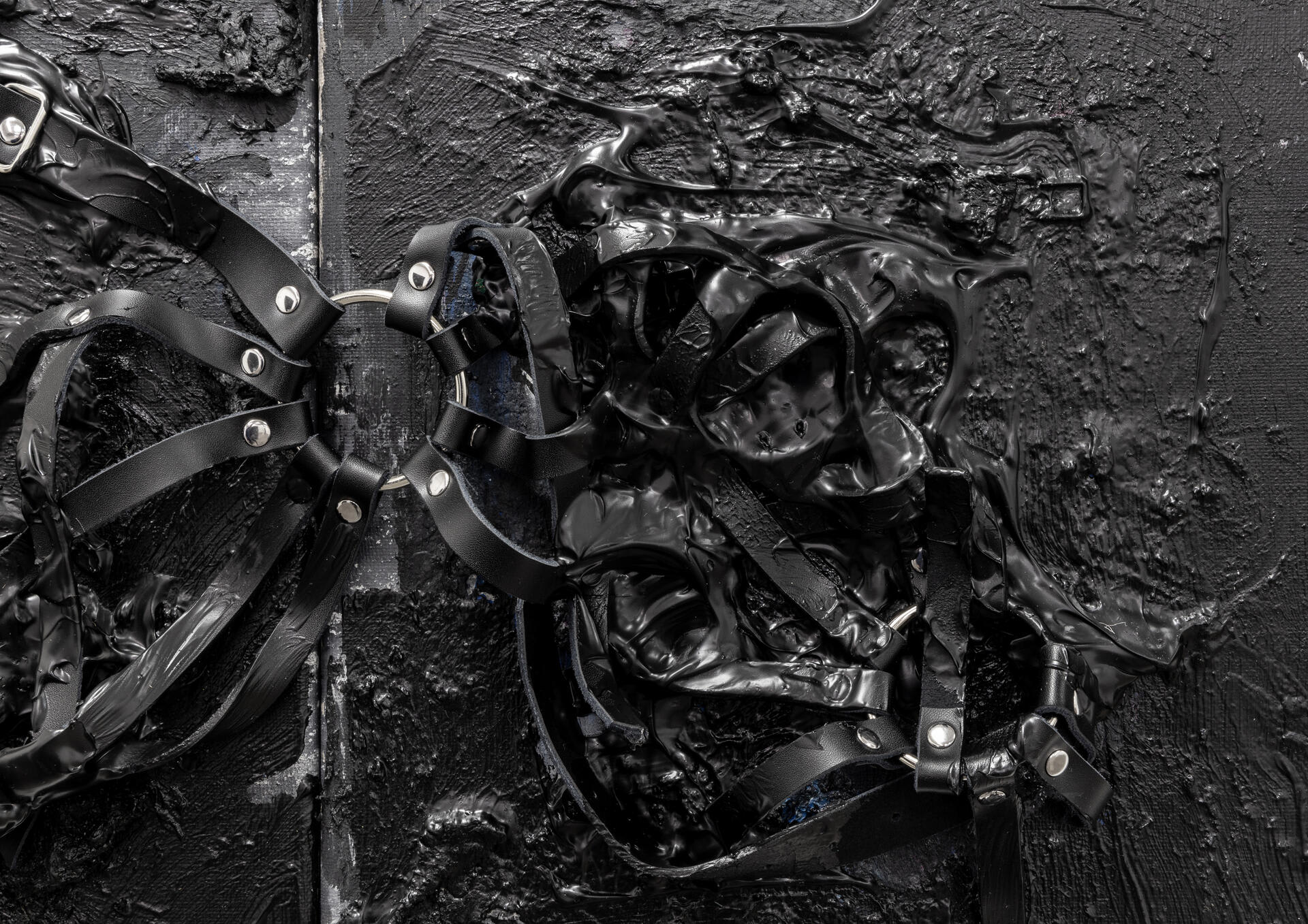
“I used to envy artists who had an instantly recognisable style,” says maverick Richie Culver. “But as my career progresses, I realise it will never be the case for me.” His work lives at the intersection of experimental music and collage-like paintings. Up until graduating from the Royal College of Art in London back in 2023, everything was extremely DIY. This was the type of aesthetic he grew up with in Hull, a small seaside town where music and visual arts group Throbbing Gristle was formed, which Culver names as one of his early influences.
One of his most famous works is a simple white canvas with the words “Born” and “Died,” both spray-painted and deliberately crossed out. A reminder that what matters most is what we choose to do between those two markers of life. In recent years, Culver’s art has involved taking previous paintings apart and reassembling the fragments to allow his work to change –– ultimately allowing himself to change as an artist, too. An integral extension of his practice emerges through his work in electronic sound, both under his own name and through his sonic alter ego, Quiet Husband, a project that lives at the intersection of techno, noise and atmospheric abstraction.


Investigating the unstable architecture of memory in his work makes him anything but an unreliable narrator. Having lived many different lives, from destructive years immersed in Berlin nightlife to fatherhood and moving back to London, Culver often depicts moments we’ve all witnessed or can relate to in some way or another. One of his early paintings reads, “Don’t forget to clap when the plane lands.” Another is a nod towards how “We fed our days to clocks.” These are traces of how personal and collective narratives migrate across media and sediment within aesthetic form.
For him, a DJ set is like a painting –– both curate and shape a journey. Whether that’s a Loewe runway soundtrack, an Atonal performance or translating memes into paintings, Culver is continually pushing the boundaries of what art can be.
-
Richie, you frequently go on phone detox. As an artist who uses Instagram as a conceptual tool, do you ever get FOMO?
-
I’m old and wise enough to know that my phone is not good for me, so I try to have boundaries around it. I fail all the time because I'm an addict and need those endorphins, like listening to a Charlie XCX or Adele song. There's a part of me that needs a constant boost, and it's hard to say no to it. At the moment, I have one of those bricks where I tap out, leave my brick in the studio and can't tap in again until I'm physically there. I don't suffer from FOMO, but as a multidisciplinary artist, I like to keep well-informed on everything –– what music is coming out, what artists are doing and what is happening in fashion.

-
Your latest exhibition, The Builder’s Daughter, took place in an abandoned restaurant in Sofia presented by PASSAGE Art and was followed by a rave among your artworks. How do you see people interact with your art? Is the aftermath always part of the artwork?
-
The exhibition was meant to be in a different place, but when they showed us this abandoned restaurant upstairs, I was like, “We've got to use this!” It felt like a blank canvas of no rules. In whatever state the exhibition space was left after the rave became the final presentation. I DJed in parts of the party and locals would bring in their USBs –– it became a real community-type thing. An exhibition space that meshed into a DIY intervention. The later it got, the respect for the work became zero. Jackets were hanging on the paintings, some were on the floor, but none of them got stolen. The next day, when I came in, I wandered around on my own, documenting, and felt quite lonely. It had a different energy to it.


“I took the text out of my visual practice, but it remains in my music [...].”
-
Do you see your music as an extension of your paintings? Does everything have to have meaning?
-
I’ve always tried to keep the Quiet Husband alias and my visual stuff contained in different bottles, in different capsules, but they always bleed into each other. I’ve attempted to do work without concepts, like the show Nuno Centeno I did in Porto, Portugal, a few years ago with paintings about nothing. But people will always dissect it –– or at least I will –– and nothing becomes something. I used to make text-based work, which I’ve pulled away from because I was overdosing with words. I took the text out of my visual practice, but it remains in my music as this almost trap-esque thing under Richie Culver. It sometimes even gets confusing for me.
I used to envy artists who had an instantly recognisable style. I used to think that was the goal. But as my career progresses, I realise it will never be the case for me. If I can look at a body of work two years later and not cringe, it feels like winning to me. Given that I’m sober now, all the work that I do comes from a completely natural way of thinking. I can still look back and think, “Fucking hell, how did you ever make that?” Everything is so disposable anyway. I don’t know what really resonates and stays with people nowadays.


-
I read you first understood art at an after party. Do you still remember the particular feeling?
-
I remember one of those last years of school when I went to an after party and there was a Nan Goldin book on the table. It's one thing to go to the rave and meet people, but when you go back to someone's house, the person you’ve been watching on the dance floor move to the music, something changes. All of a sudden you're in their environment, you see how they live and what they wear and what they're into. I was sucking it all in. The next week, your hair is different, you wear a Throbbing Gristle T-shirt and mould into a different person. That was 15-year-old me.
I followed the breadcrumbs in my head and started taking photographs and making collage. At the time, when Damien Hirst was making the sharks in tanks, he was a really cool conceptual artist, not the Damien Hirst we see today. I was looking at what all these people were doing, which was taking art education out of it, just making shit up and putting it in a white cube. That’s how I saw it at that time. He’s got a shark, he's pickled it, he's put it in formaldehyde, he's put it in a gallery, and all of a sudden it means something.


“I feel like a very inadequate human when it comes to doing things.”
-
What does your own research look like?
-
I feel like a very inadequate human when it comes to doing things. I've really carried that DIY aesthetic with me all the way and wished my studio process was that of someone up at 3 am with music on, in the zone. Unfortunately, it's not. I strike whenever that moment happens, whether that's in a McDonald’s disabled toilet with my Dictaphone or pulling over at the traffic lights. Sometimes I cringe a little bit at my process because everything's done on the road. I do have a studio, but not much happens there.

-
Your new Quiet Husband release, The Architecture of Perception, which will be out next month, draws a direct line between techno performance and painting. How do you want to be perceived?
-
When I was a teenager, there was this guy who brought dance culture to my little seaside town. He once said something along the lines of, “You need to be the kind of artist who can design the flyer, design the merch, play at the party and the after party, and take the photographs.” That always stuck with me, and I guess that's how I want to be perceived. Not as a jack of all trades, master of none, but at whatever level under the DIY aesthetic. Of course, we live in a world where collaboration and community are very important, but I like to think that if push comes to shove, I can do everything.
“I want to understand how I am built, and I'm still trying to make sense of that.”
-
The concept of architecture seems very present throughout your work. Would you say you're someone who always wants to understand how things are built?
-
I want to understand how I am built, and I'm still trying to make sense of that. I've got three children, two boys and a little girl. Watching specifically those guys grow up is a massive reflection on myself and my shortcomings in life. There are obviously positives, but in general, I'm very much of a glass-half-empty person. To answer the question, I dig within myself rather than unpacking somebody else's artwork or how an album was made.

-
You once said,“being in the moment is the goal.” Would you still agree? What is the goal really?
-
Right now, the goal is to be in the moment and there are various things I can do to achieve that. One is to put the phone down. Two is to go to a meeting with fellow recovered addicts to connect. Unfortunately, I cannot get rid of the shackles of wanting to be on my own. It frightens me how much I look at the clock until the day ends, until I can be on my own. I don't think that's very productive, and I don't think it's the way forward. It's also not something I want to pass on to my kids. It's something I constantly battle with. I think it's living in London as well. I rush my dinner, go to the next thing until the day is over. And then weeks go by. Months go by. Time goes by. I guess it all comes back to being in the moment, looking at what I've done and being happy with it rather than rushing through life. To take time and think about the good things.
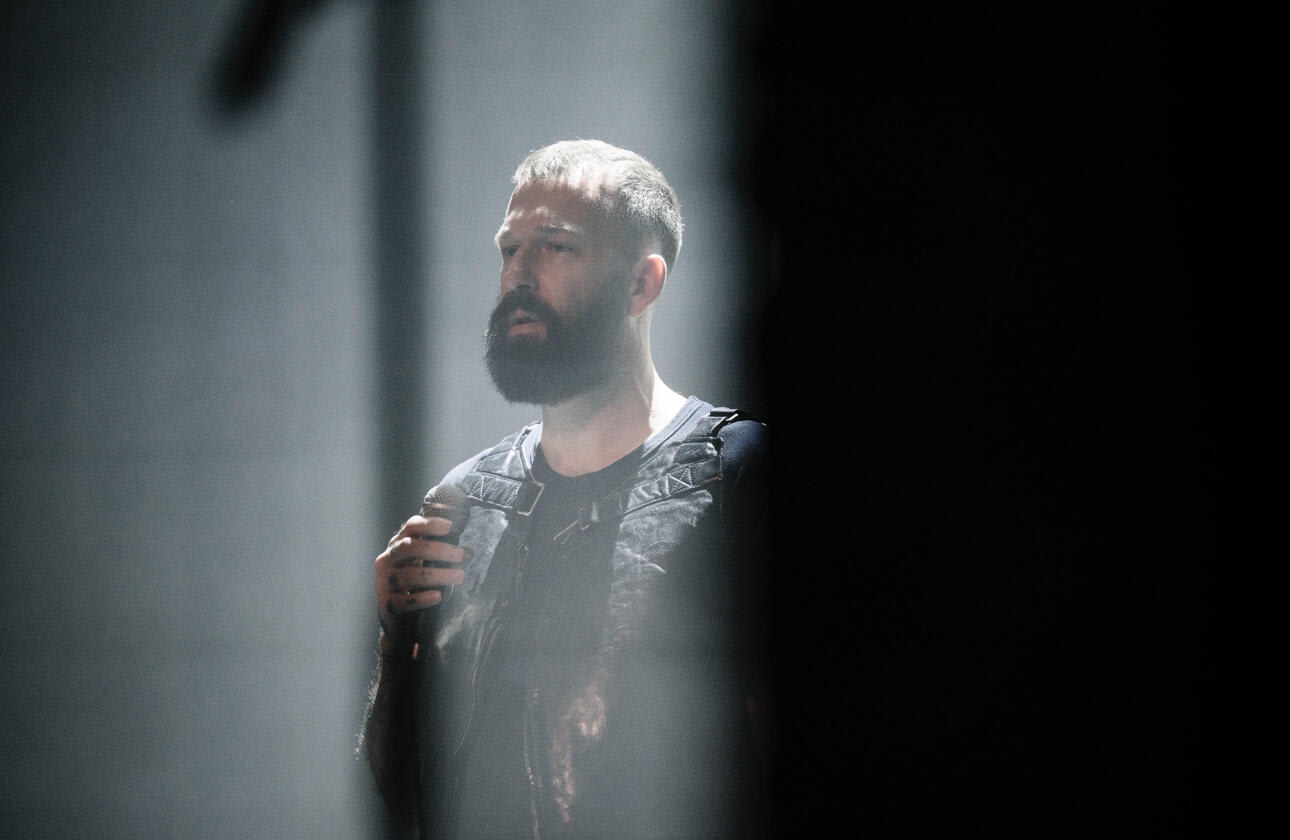
Quiet Husband’s ‘The Architecture of Perception’ will be out July 10th via Industrial Coast.
Juule Kay is a writer working at the intersection of art, culture and design.